Ventilation Systems for Chemistry Laboratories, Research Centres and Universities
In a chemistry laboratory, air quality is not an option. It is a regulatory requirement and an absolute safety condition. Corrosive vapours, volatile solvents, toxic gases: every procedure exposes laboratory staff to risks that demand efficient, reliable air extraction adapted to the chemical constraints of the environment.
SEAT Ventilation offers a complete range of centrifugal fans and flow control systems specifically designed for chemistry laboratories, research centres and universities.
Get a Technical Recommendation View Our Laboratory Products
Why Ventilation is Critical in a Chemistry Laboratory
A chemistry laboratory is a unique working environment: a wide variety of substances handled, frequent user turnover, and the simultaneous presence of multiple sources of gaseous contamination.
Risks Associated with Corrosive Vapours and Gases
Chemicals used in laboratories generate vapours and gases that may be toxic, corrosive or flammable. Without source-capture devices, these contaminants disperse into the laboratory atmosphere. The fume hood is the primary protective device: it confines emissions within a ventilated enclosure, from which the extracted air is discharged outside via an exhaust fan.
Applicable Regulations and Standards
• NF EN 14175: European standard for fume cupboards (performance, testing, installation)
• French Labour Code (art. R. 4222-1 et seq.): employer obligations regarding air quality
• INRS Guide ED 6228: design of laboratory ventilation systems
Our Extraction Solutions for Chemistry Laboratories and Universities
Polypropylene Centrifugal Extractors
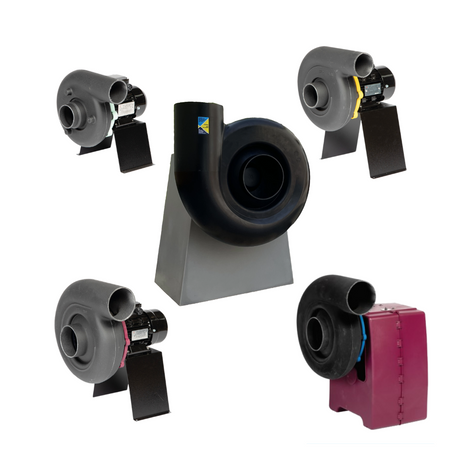
Made from polypropylene (PP), our centrifugal fans offer excellent chemical resistance against acids, bases and solvents commonly used in laboratories. The SEAT, JET and STORM series are available in various diameters to suit all configurations: individual fume hood, centralised multi-hood network, or room extraction.
View the Laboratory Extractor Range Chemical Index
Flow Control — SMARTFLOW & SEAT RX
• SMARTFLOW: next-generation controller, automatically adjusts airflow based on sash position and usage.
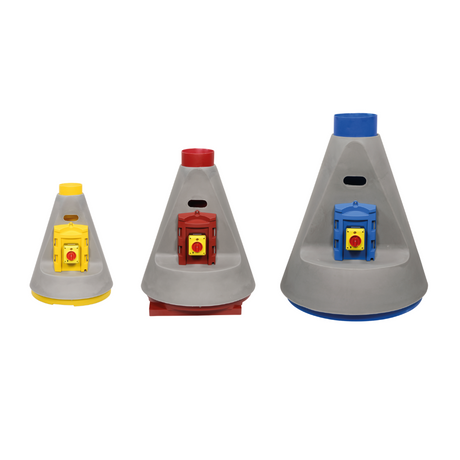
• SEAT RX: in-duct flow control, compatible with centralised installations.
Automatic Fume Hood Closure — Ecoglass
Ecoglass automatically closes the sash after detecting inactivity. In the closed position, the fume hood consumes up to 60% less energy.
How to Choose a Fume Hood Extractor?
Key Technical Criteria
• Extraction flow rate: in m³/h based on hood size and required face velocity (0.3 to 0.5 m/s)
• Available pressure: duct network pressure losses
• Chemical resistance: nature of substances handled (see chemical index)
• Noise level: acoustic constraints of the technical room
• ATEX classification: if risk of explosive atmosphere
Use Zephyr to Size My Installation
References and Fields of Application
• Teaching laboratories (secondary schools, technical colleges, engineering schools, universities)
• Research laboratories in organic, inorganic chemistry and biochemistry
• University hospital centres (CHU)
• Public research institutes (CNRS, INSERM, CEA…)
• Quality control laboratories (pharmaceutical and food processing industries)
→ See also our solution for the pharmaceutical and chemical industry
Frequently Asked Questions — Laboratory Ventilation
What is the difference between general ventilation and fume hood extraction?
General ventilation renews ambient air and dilutes contaminants. Fume hood extraction captures gases at source, before they disperse into the room. Both systems are complementary and are generally both required.
What materials should be chosen for a fume hood extractor?
Polypropylene (PP) is the reference material: it resists the vast majority of mineral acids, bases and organic solvents. Consult the chemical compatibility index to verify resistance to your specific substances.
How do you size an extractor for a fume hood?
Sizing is based on the hood width, duct network pressure losses and specific constraints (temperature, ATEX). A flow rate of 400 to 1,000 m³/h covers most standard fume hoods. Use the Zephyr tool for online calculation.
What is the NF EN 14175 standard?
It is the European reference standard for laboratory fume cupboards. It defines performance requirements (face velocity, containment), test methods and installation conditions.
Can energy consumption be reduced without compromising safety?
Yes, through variable airflow control (VAV). SMARTFLOW and Ecoglass enable savings of up to 60% on extraction without any compromise on safety.
Need Advice for Your Project?
Contact Us for a Project Download the Catalogue Use the Zephyr Tool